
A Practical Fall Yard-Cleanup Kit for Homeowners
Choose tools around three jobs: gathering leaves, moving them and collecting them. A useful cleanup kit can stay simple.

A useful fall cleanup kit does not need to fill a shed. It needs to help with three jobs: gathering leaves, moving them across the property and collecting them for the next step. The right combination depends on your lawn, garden beds, trees and access to your collection area. Start with the tools you already own, then fill the gaps that make your regular cleanup awkward.
These are researched selections based on manufacturer specifications and the matching Amazon.ca listings, not hands-on product tests.
Start with a rake that fits the space
A leaf rake is the basic gathering tool for many yards. A broad head can be convenient across an open lawn, while a narrower head fits more easily between plants and around small beds. If your property has both, an adjustable head is one option to compare with keeping separate rakes.
Handle length, empty weight and grip deserve as much attention as head width. Think about the distance you will carry the tool and where it will be stored. Check the manufacturer's intended surfaces and tasks, especially when comparing a leaf rake with heavier garden rakes designed for different work.
Decide how you will move the leaves
For a small front yard, gathering leaves near the collection point may be enough. A larger property creates another task: moving material from several areas to one place. That is where a tarp or reusable collection container can become useful.
A tarp provides a surface for gathering leaves and moving a batch across a clear route. Compare its dimensions with your gates, paths and storage space. A larger tarp has more capacity, but it also creates a larger load. Consider what the ground along your route will do to the material, and check the product's intended use.
If the route includes steps, tight turns or obstacles, a smaller container may be easier to manage. Choose around the route you actually have, rather than buying the largest option simply because it holds more.
Make collecting leaves less fiddly
Leaf scoops act as an extra-wide pair of hands for picking up loose piles. They can be useful when you repeatedly transfer leaves into a bag or container. They are less essential when you move material on a tarp directly to its destination, so consider your process before adding them.
A bag holder is another optional helper. Its purpose is to keep a collection bag open while you fill it. Before choosing one, check that it fits the bags you use and that it has a convenient place in your storage area. A helpful accessory should remove a repeated annoyance from your own routine.
Add pruning shears only for selected cutbacks
Leaves and plant cutbacks are separate jobs. If your cleanup includes trimming, identify the plant and decide what needs removing before choosing a cutting tool. Healthy standing stems and seed heads do not all need clearing away in autumn.
A small bypass pruner can be useful for selected cuts within its stated capacity. It does not replace a larger tool for thicker growth. If the work is simply gathering fallen leaves, there is no need to add pruning tools to the kit.
Build the kit by task
| Task | Tool to consider | When it may be unnecessary |
|---|---|---|
| Gathering leaves on open lawn | Leaf rake | Your existing rake already suits the area |
| Working between plants | Narrow or adjustable rake | Your existing rake fits the spaces |
| Moving leaves across a yard | Tarp or reusable container | The collection point is beside the work area |
| Transferring piles into bags | Leaf scoops | You use a different collection method |
| Keeping bags open | Compatible bag holder | Filling bags is already straightforward |
| Selected small plant cutbacks | Bypass pruning shears | Your cleanup only involves fallen leaves |
Two optional additions to your cleanup kit
A collection container and a pair of shears solve different jobs. Choose either only when it fills a gap in your existing tools.
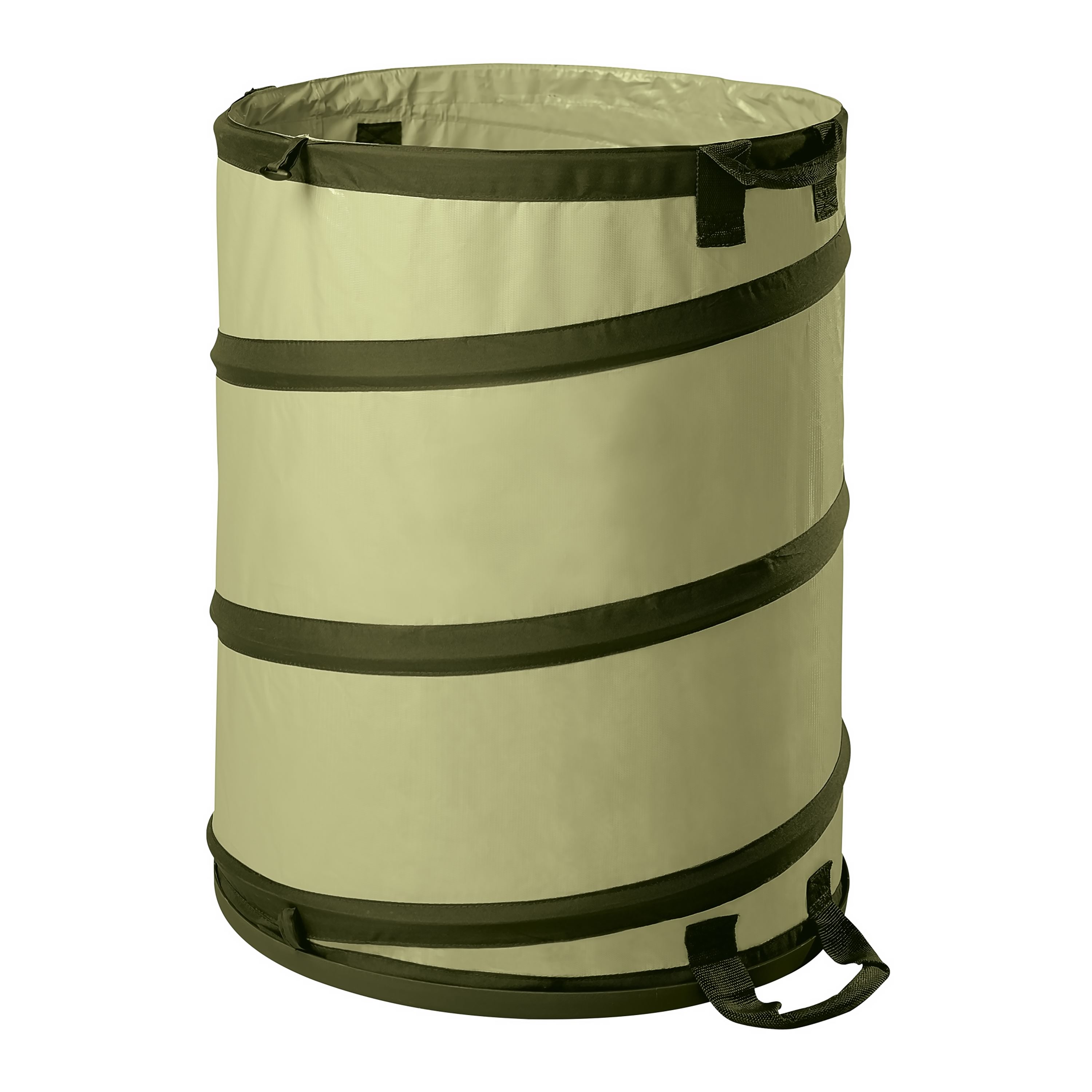
Fiskars 30 Gallon HardShell Bottom Kangaroo Garden Bag
This reusable garden bag folds for storage and has a rigid base. It is an option for gathering leaves and garden debris as you work through different areas of the property.
- 30-gallon capacity
- Folding design
- Rigid base
When it may help: Consider it when you want a reusable collection container that can be stored between cleanups.
Keep in mind: Treat it as a working container, not an assumed municipal pickup container. Transfer material into an accepted container when your collection rules require it, and keep each load manageable.
I may earn a commission if you buy through this link.
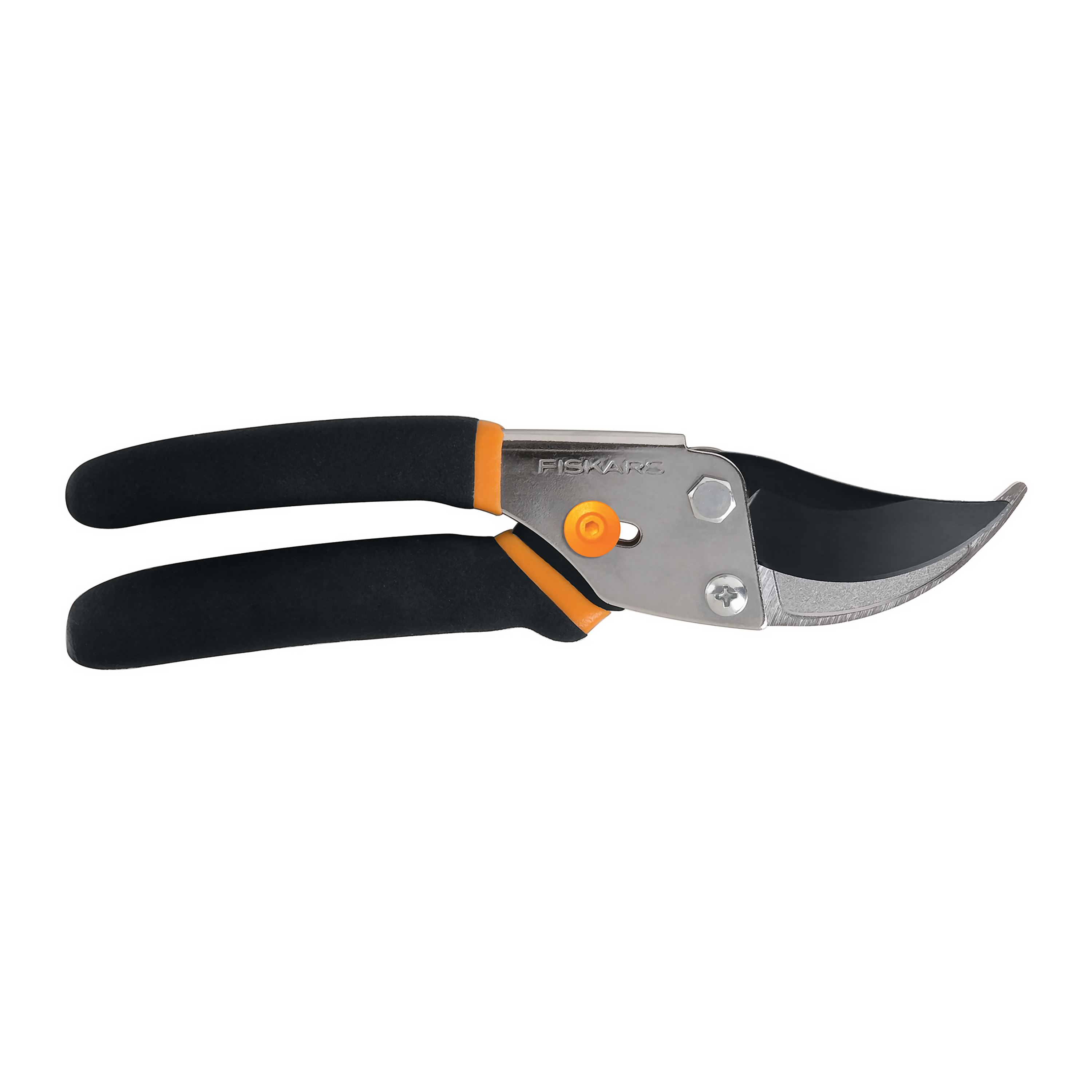
Fiskars Bypass Pruning Shears
These shears have steel bypass blades, a locking mechanism and a stated cutting capacity of up to 5/8 inch. They suit selected small cuts when the plant and timing call for pruning.
- Steel bypass blades
- Up to 5/8-inch cutting capacity
- Locking mechanism
When it may help: Consider them if your cleanup includes identified plants or stems that need selective trimming.
Keep in mind: Shears are optional for a leaf-only cleanup. A stated cutting capacity is a maximum, not a reason to force a cut; larger growth needs a tool sized for that work.
I may earn a commission if you buy through this link.
Choose collection supplies for the destination
Decide where the material will go before buying collection supplies. Municipal yard-waste pickup, a home composting setup and an arranged removal service may call for different containers and preparation. Check your municipality's current collection instructions and schedule before setting anything at the curb.
For Toronto and Etobicoke homeowners, collection details should come from the City of Toronto's current guidance. Avoid choosing bags or containers based only on a product description that says they are suitable for yard waste. Local requirements determine what can be set out and how it must be prepared.
Buy only what solves a real problem
Before ordering, walk through one cleanup session in your head. Where do you start? Where will the leaves collect? How will you move and store the tools afterward? That short exercise often makes a missing tool obvious and shows which extras would add little.
Use the product examples in this guide as a shortlist to compare with your yard. Check dimensions, included parts and the exact model on the current listing. After the season, clean and store each item according to its instructions so the kit is ready for the next cleanup.
Common questions
What should I buy first?
Start with a leaf rake that suits your space and a collection method that meets your needs. Add moving or bagging accessories only when those tasks are inconvenient.
Are leaf scoops essential?
No. They are an optional way to transfer loose piles into bags or containers. Whether they help depends on how you gather and move the leaves.
Is a larger kit better for a larger yard?
A larger yard may need a better way to move material, rather than more tool types. Think about walking distance, access and collection points before increasing capacity.
Sources and related reading
Product details reviewed 25 October 2026. Check the current listing and manufacturer instructions for the exact model before buying.